
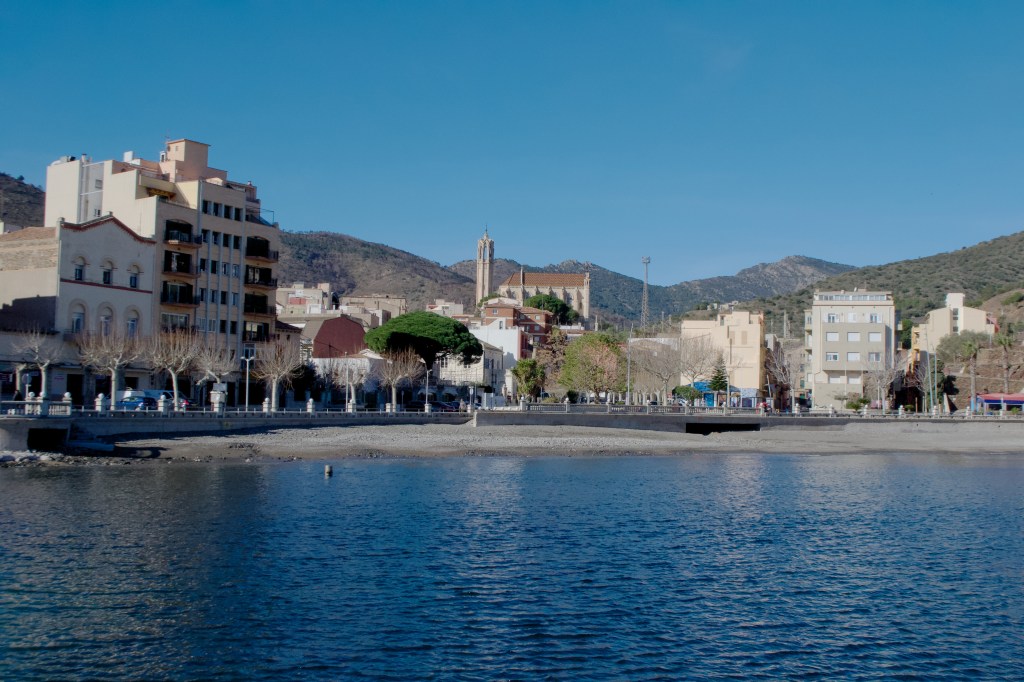
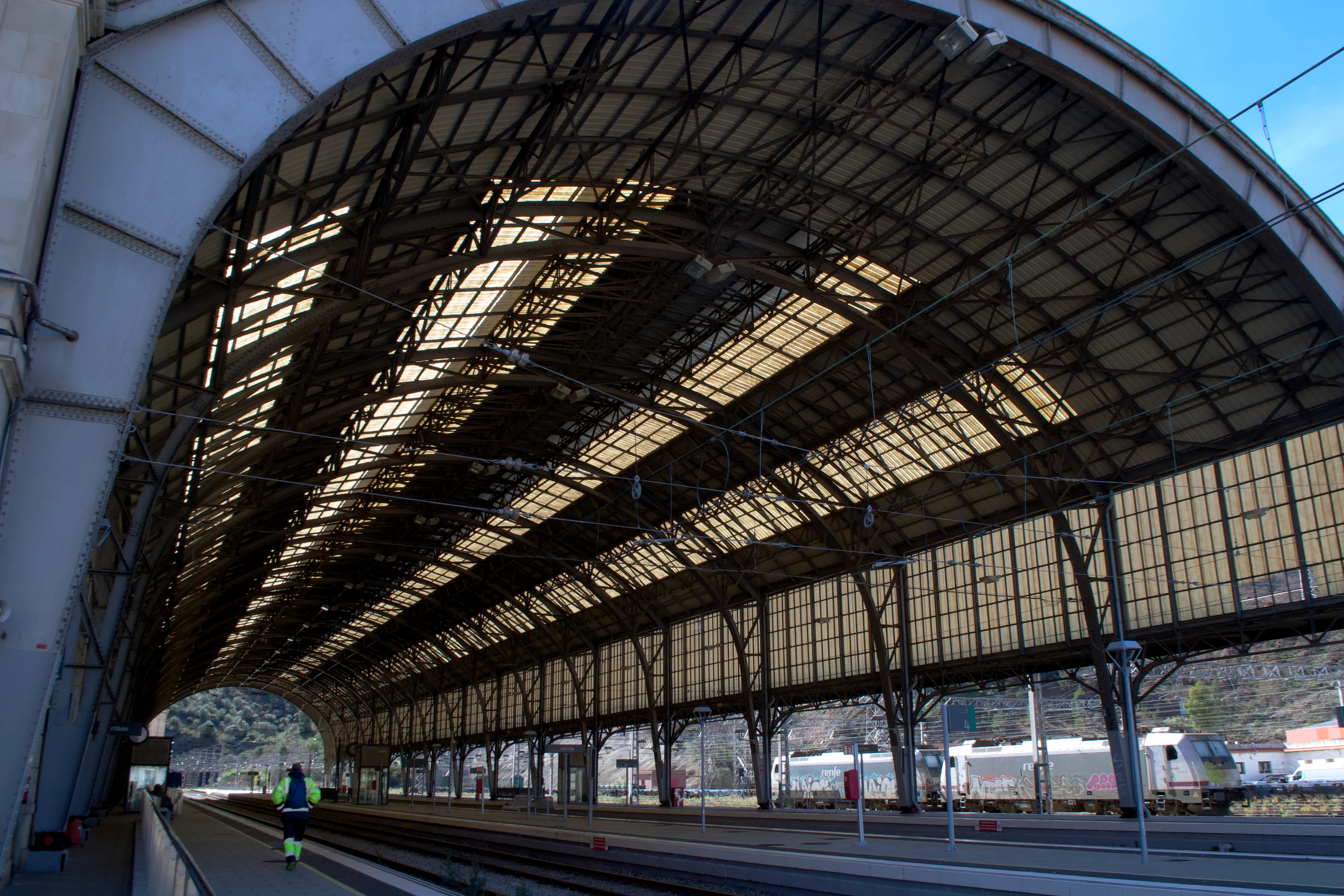
Port Bou is an unremarkable Spanish coastal town on the Mediterranean coast. A few miles north is France. For many years its only significance was as a border crossing where passports and goods would be checked at the massive railway station which dominates the town. Throughout my adult life the place had taken on in my mind an almost mythical significance. All I knew of it was it was the last resting place of writer Walter Benjamin. When staying across the border in France on a trip, I knew I had to visit the place.
Benjamin was a German writer active in the 1920’s and ’30’s. He’s difficult to categorise, he was Jewish, a marxist, a literary critic, philosopher, essayist – the range of his work can be seen in the book ‘Illuminations’, edited by his friend Hannah Arendt and published after Benjamin’s death.
When the Nazis came to power in Germany in 1933 he went into exile in Paris. For the time being he was safe but when Germany invaded France in June 1940 he knew his life was in danger again.
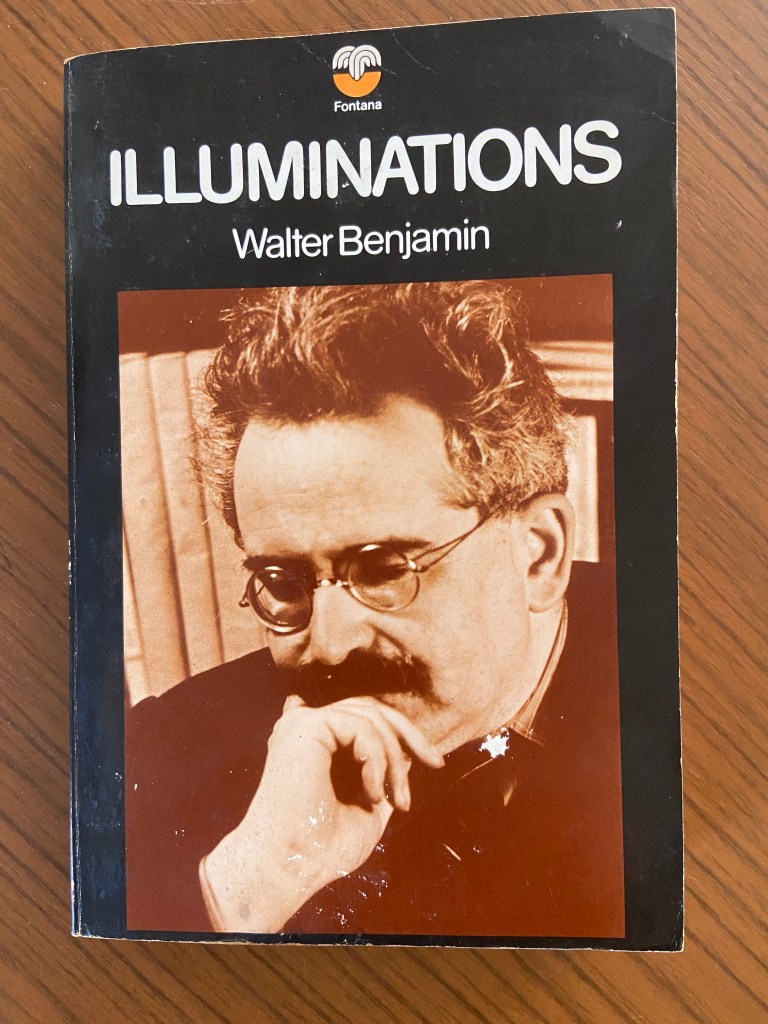
My battered paperback copy of Illuminations by Walter Benjamin
What followed was a story loaded down with the terrible weight of ‘what might have been’. While the German Army raced across France and the French government collapsed, Benjamin managed to obtain an emergency visa for the USA. He had also got a Spanish transit visa so he could cross Spain to Portugal and get a boat from Lisbon to America.
On September 26 1940, along with a small group of fellow refugees, he made the journey on foot from France to Port Bou only to be told that Spain had closed the border that same day and the refugees would be sent back to France the following day. Benjamin was suffering from a heart condition and was exhausted by the walk over the mountains. He couldn’t face going back and in despair took his own life that night. The Spanish border officials, shocked by his death, allowed his companions to proceed to Portugal. What’s more, a few weeks later the embargo on exit visas was lifted. Fate had decreed that it was only on that one particular day that Benjamin would not be allowed to cross Spain.


Though Jewish, Benjamin is buried in Port Bou’s small Catholic cemetery. Near his gravestone is an extract of one of his last letters, ‘In a situation with no way out, I have no other choice but to make an end of it. It is in a small village in the Pyrenees, where no one knows my name, that my life will come to a close…There isn’t enough time left to me to write all the letters I should have wished to write.’


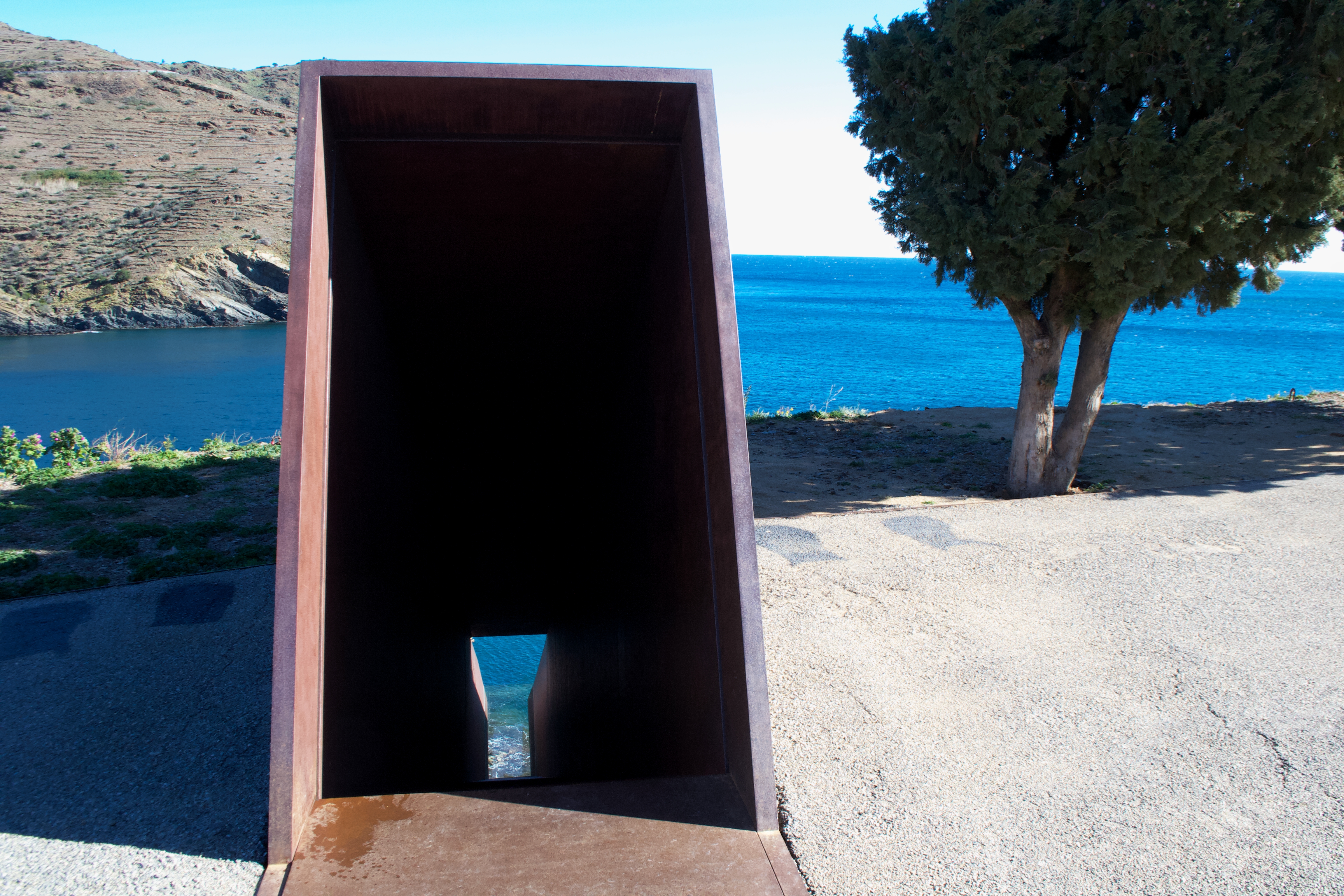
Outside the cemetery on a rock face overlooking the bay is a memorial to Walter Benjamin by the Israeli sculptor Dani Karavan. It’s stark, very simple, and for reasons I don’t completely understand, incredibly moving.
A set of steps, enclosed in a metal tunnel descend from the cliff top. The steps end precipitately, and frame the sea below. The sound of the waves and wind echo in the metal tunnel. It feels like a dangerous, other-worldly space – maybe that was the intention. Unlike so many bland memorials to public figures, this is one you are never going to forget.
Passage by Dani Karavan
 Francis Hanly Photos