

My favourite Henry Moore reference in popular culture is from Hancock’s Half Hour (1959) when Tony Hancock is all excited about being cast in wax for Madame Tussauds. Offering advice, Sid James says if he wants to be immortalised he should go for stone or bronze. He suggests getting Henry Moore to do a statue of him. Hancock replies in typical fashion,
“No thank you. I don’t want great holes stuck all over me – outside a block of flats with horrible kids crawling through them!”

That image of the kids climbing through Hancock will never leave me. The exchange points to Moore’s celebrity status in Britain’s post-war cultural firmament as our number one sculptor but also to the fact that in those days any grand scheme of public housing would have a notable piece of public art as part of the landscaping. Great public housing along with monumental public art has vanished and we can only look back with a sense of loss at those more optimistic times. However, the power of Moore’s art survives as can be seen by a trip to his studio just outside London.
https://henry-moore.org/studios-and-gardens/
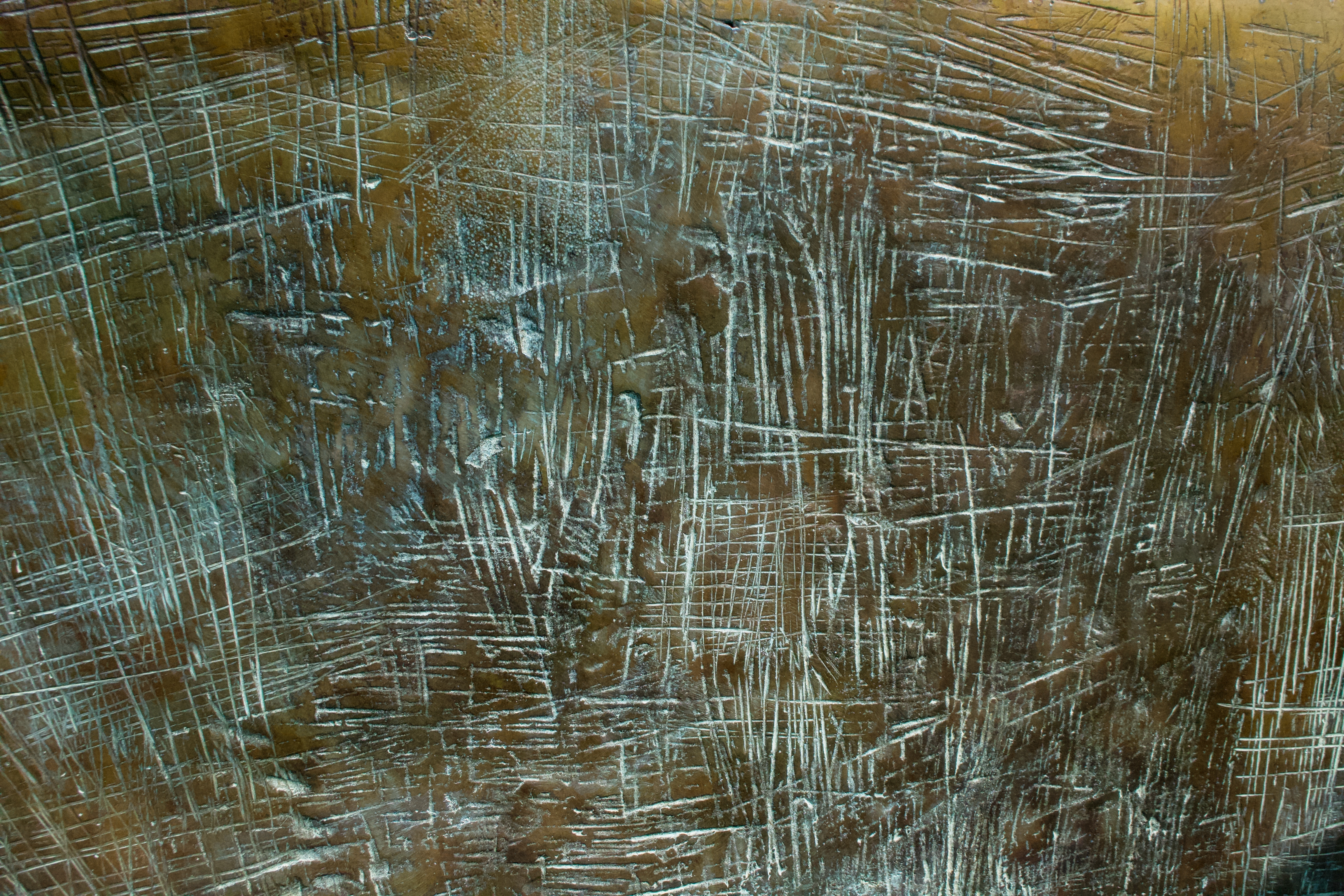
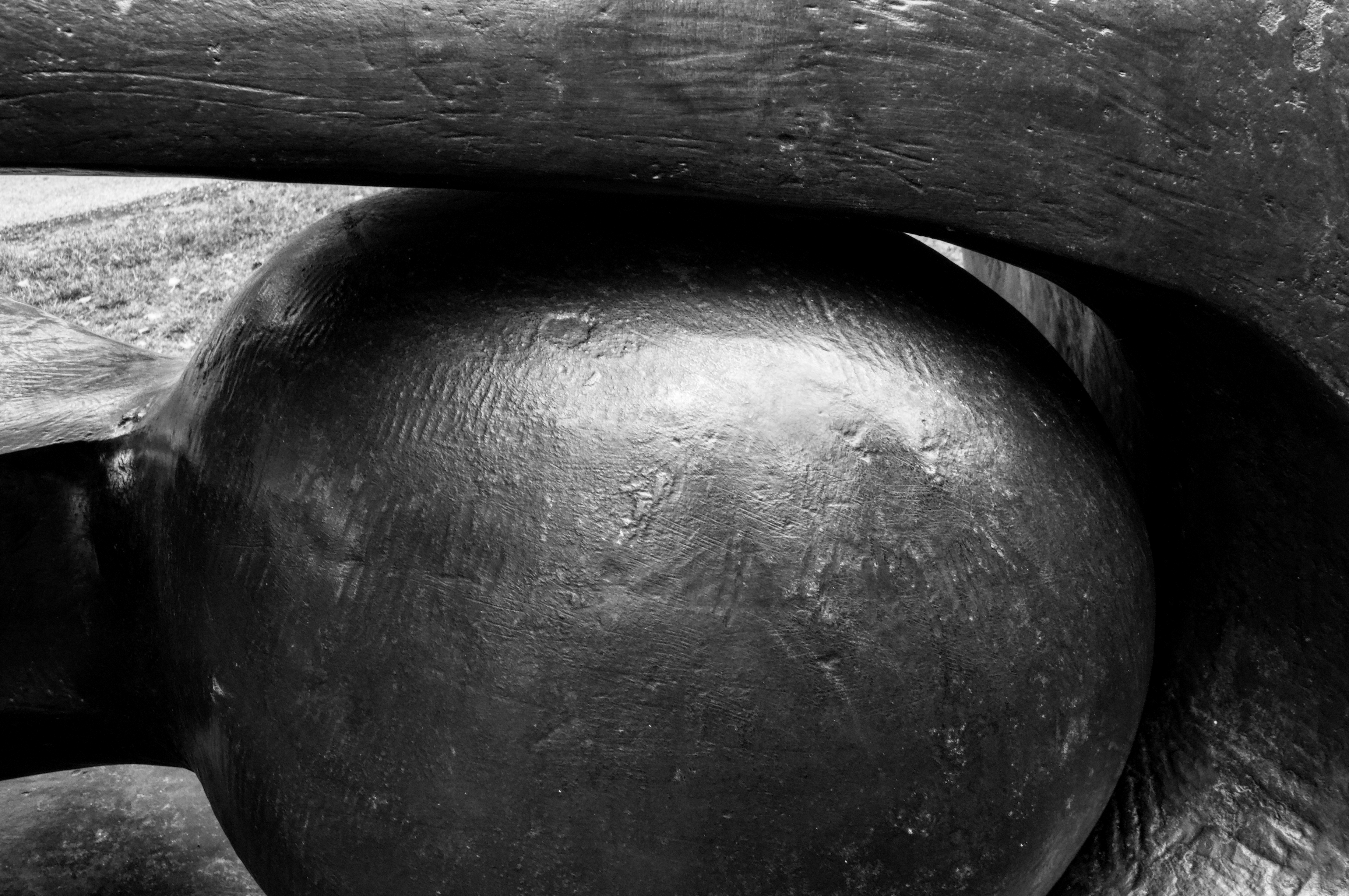
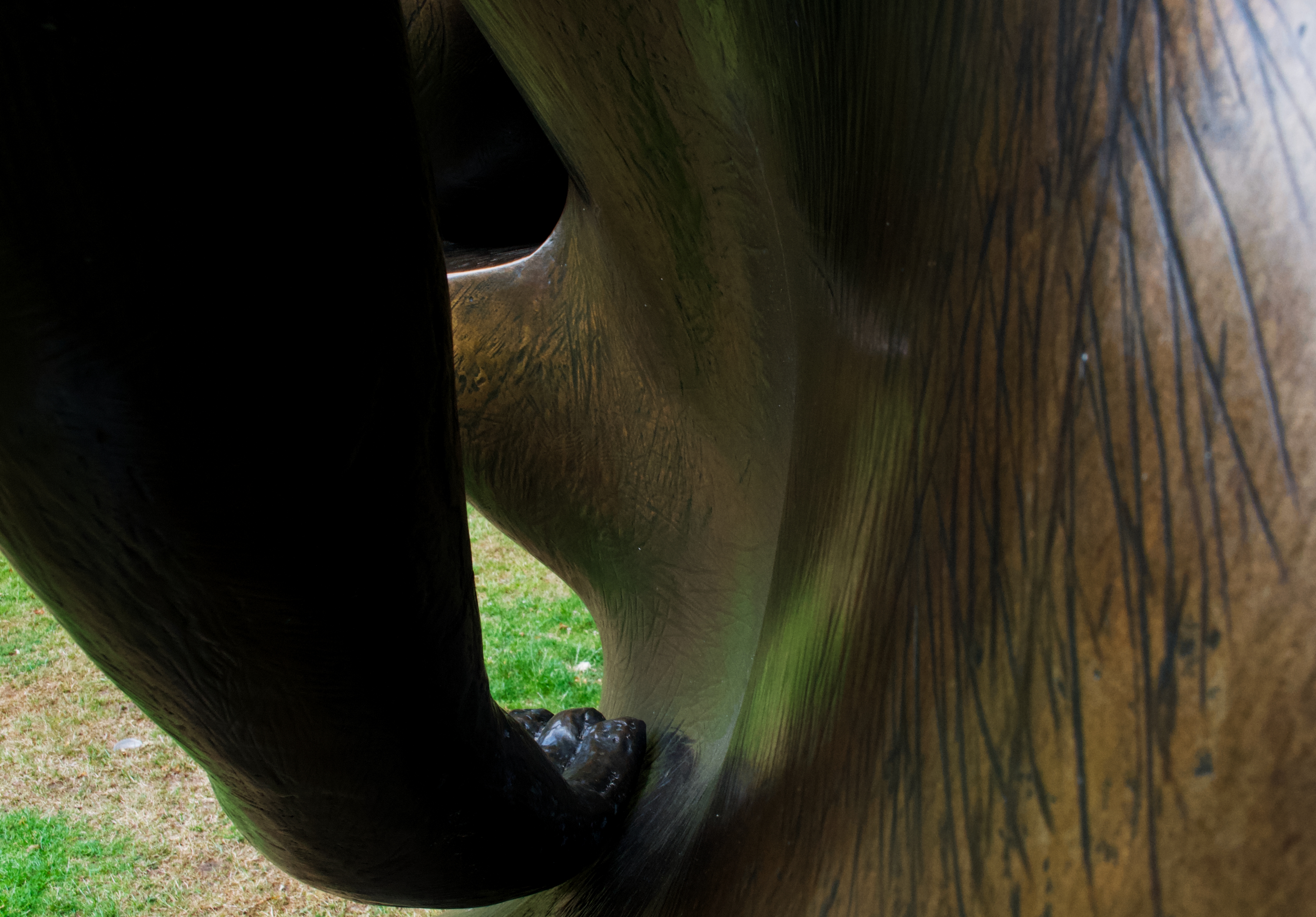

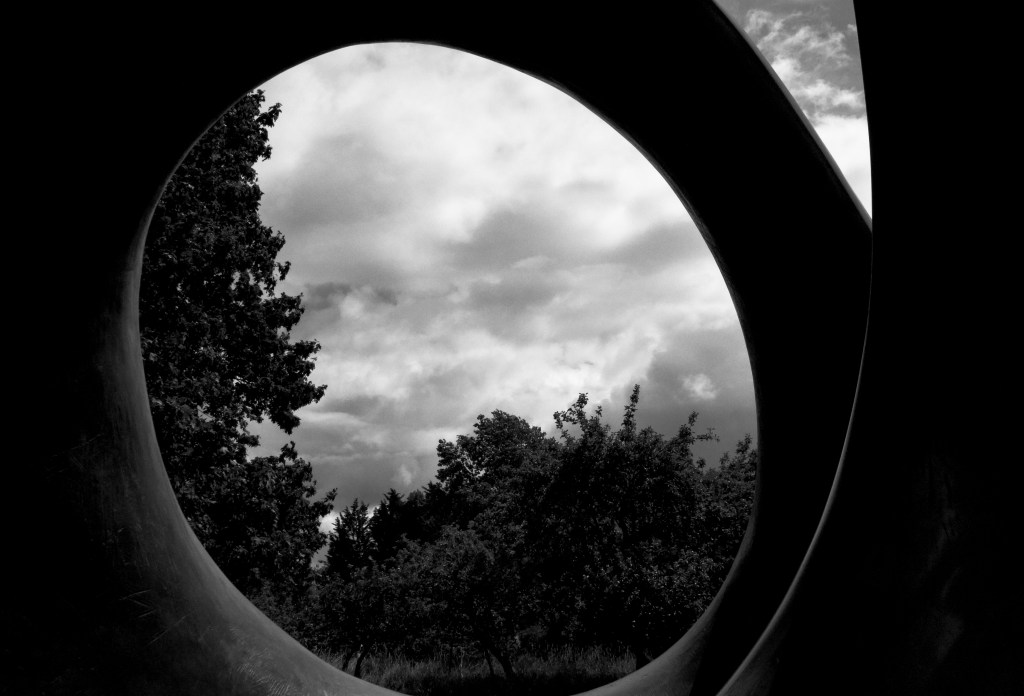
I always thought of Moore’s sculptures as being smooth as polished brass but up close you can see how he’s scarred and scratched the surface of some works. It makes them feel much more organic – as if they are part of a living organism.


At the studios and gardens, Moore’s work is dotted around in the sheep fields that surround what was his house. These monumental works have the appearance of alien artefacts, deposited without any explanation. The sheep seem unfazed by it all.

 Francis Hanly Photos